Fur and Formula: Maine Coon Color Decoded
This page explores the science and wonder of Maine Coon coats — how colors and patterns are inherited, what genes are at play, and how breeders use this knowledge to make thoughtful, ethical pairings. Inspired by scientific research and simplified for clarity, our goal is to make coat genetics accessible without losing depth, and to help predict what to expect in future litters.
How Coat Color & Pattern Form
Every cat inherits genes that determine pigment, pattern, dilution, white spotting, and more. What we see (phenotype) depends on how those genes interact—some mask others, some modify them.
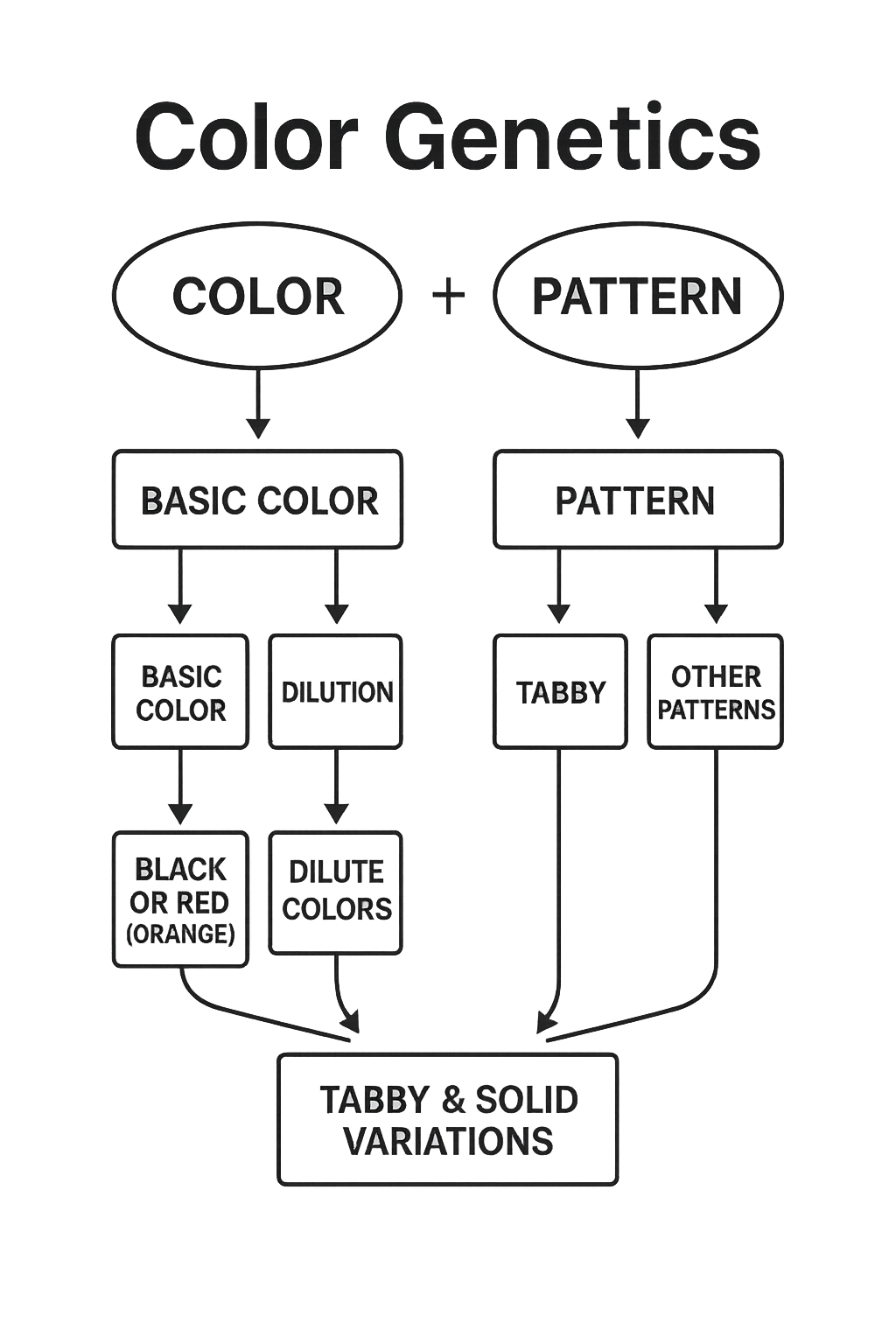
Key Loci & Their Effects
Here are the main gene loci that influence appearance. The dominance order shown is a simplification, but it gives a working framework. Kingsize Cat genetics article.
| Locus (Gene) | Dominant → Recessive | Role / Effect |
|---|---|---|
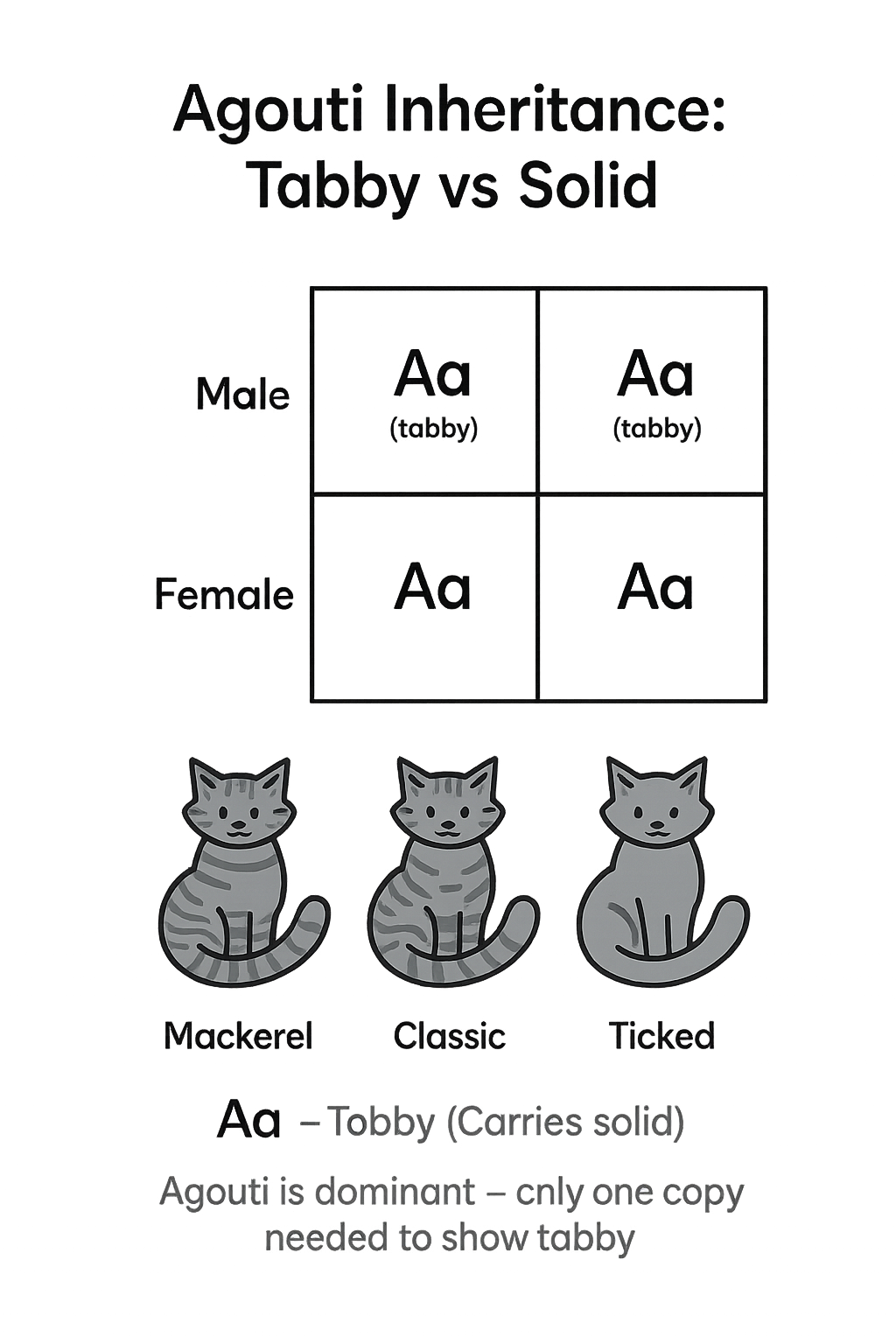
| A / a (Agouti) | A (pattern) > a (non-agouti / solid) | Controls whether the coat shows pattern (tabby, spots) or is solid. |
| B / b / bl | B (black) > b (chocolate) > bl (cinnamon) | Determines base pigment (black vs. chocolate / cinnamon). |
| C series (C, cᵇ, cˢ, cᵃ, c) | C (full color) > cᵇ, cˢ > cᵃ / c | Controls pigment expression and point / partial restriction, as in colorpoint / Siamese forms. |
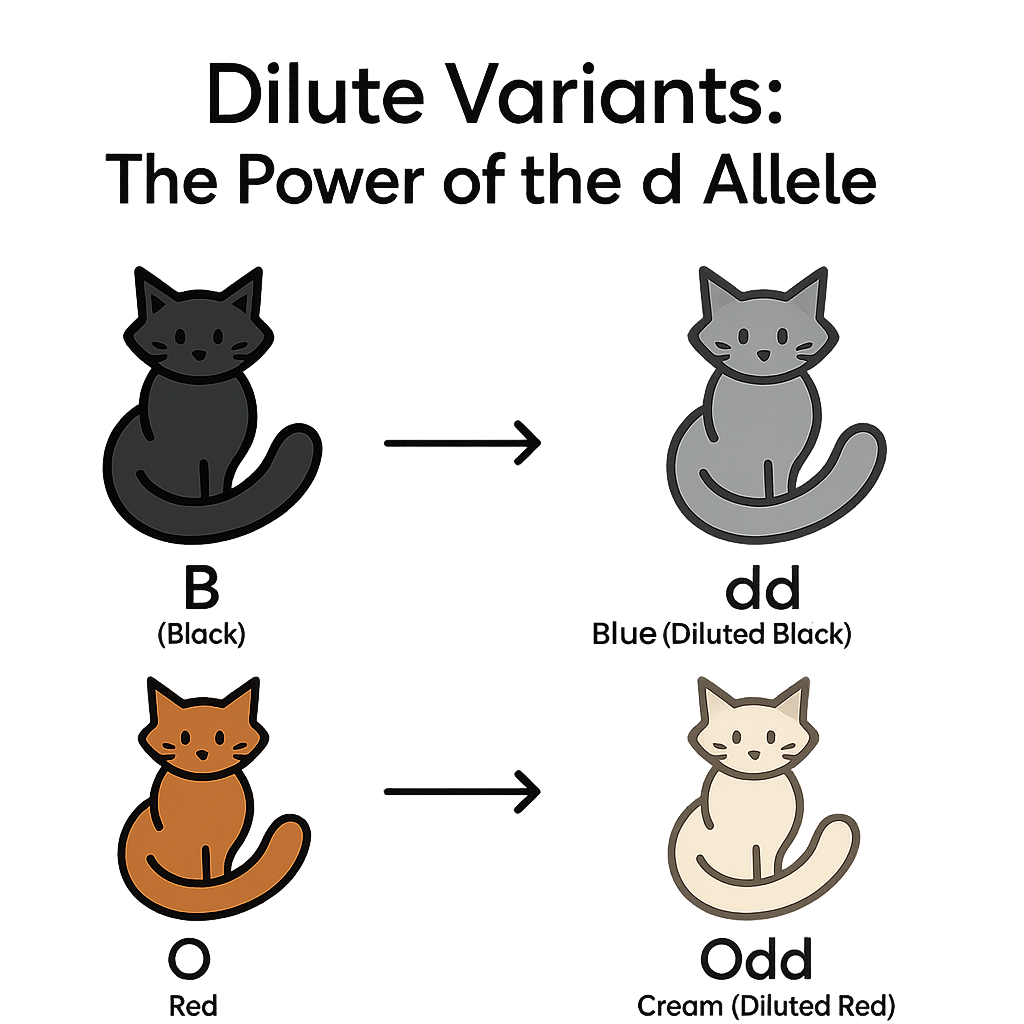
| D / d | D (dense) > d (diluted) | Dilution—e.g. black becomes blue, red becomes cream when “d” is homozygous. |
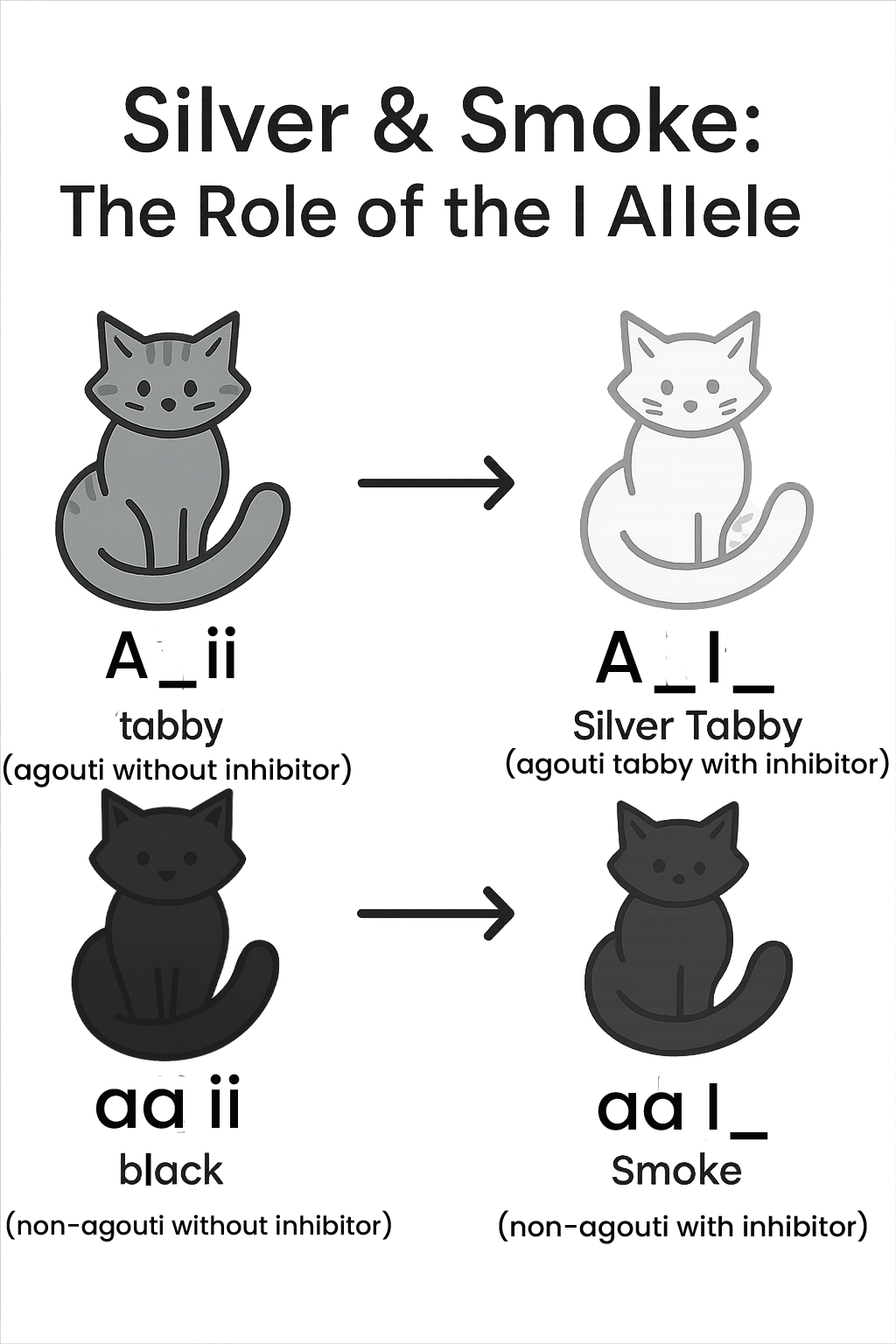
| I / i | I (inhibitor / silver) > i (non-silver) |
Causes silvering, smoke, or chinchilla effects by inhibiting pigmentation in the hair shaft.
|
| O / o (on X chromosome) | O (red) > o (non-red) | Governs red / orange pigment; sex-linked trait so inheritance differs by male (XY) vs female (XX). |
| S / s | S (white spotting) > s (no spotting) | Generates white patches of fur at varying degrees. |
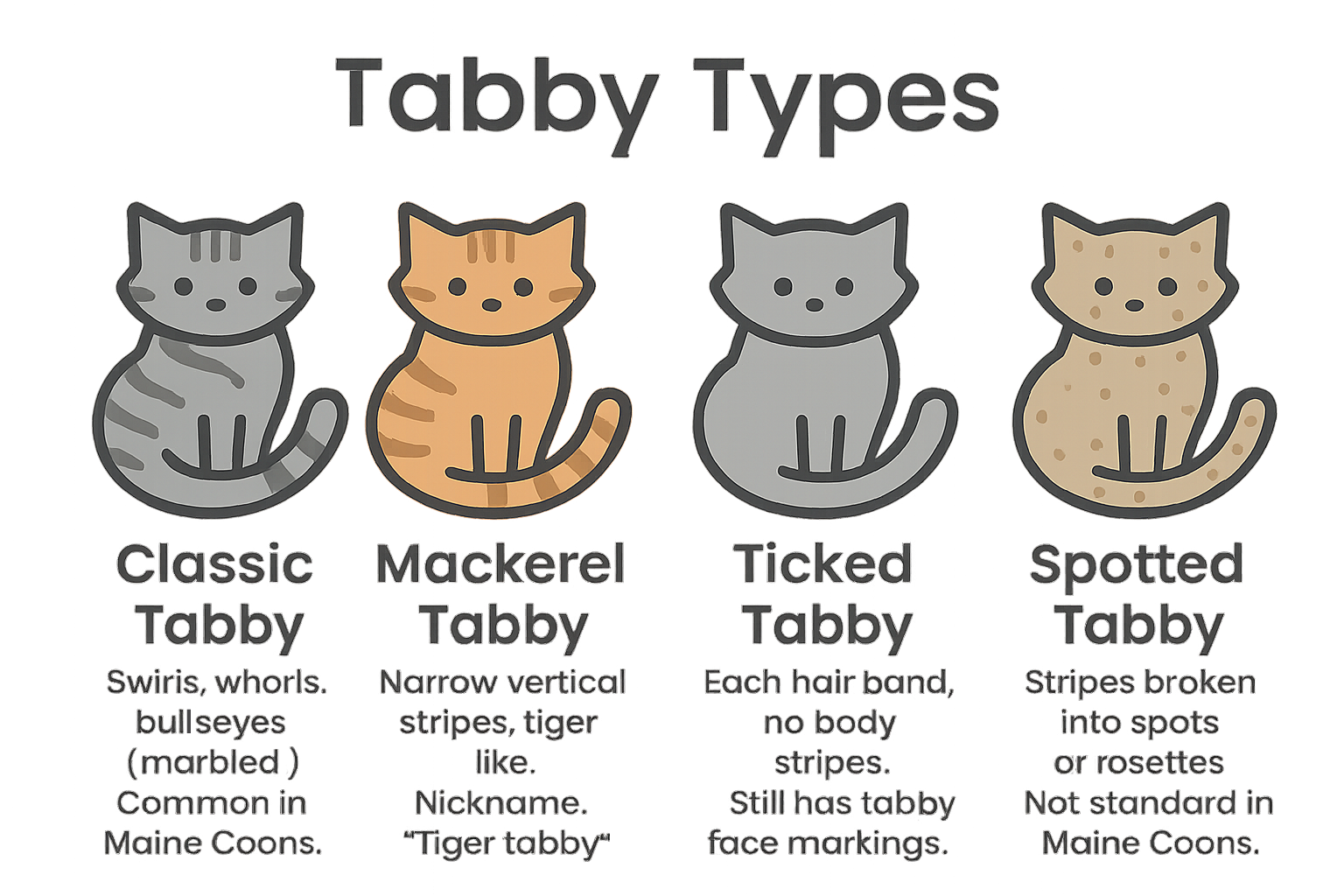
| Tᵃ / T / tᵇ (Tabby type) | T (mackerel / ticked) > tᵇ (blotched) |
Determines which tabby pattern appears: classic, mackerel, spotted, or ticked.
|
Inheritance & Punnett Squares
You can analyze each locus independently, by Mendel’s law of independent assortment, then combine the results for a full genotype. For a given trait, use a Punnett square to cross alleles from each parent. Over multiple loci, you can enumerate all possible genotype combinations.
For example: two parents that are heterozygous (Aa × Aa) at the Agouti locus yield 25% aa (solid), 50% Aa (patterned but carrier), 25% AA (patterned homozygous).
Color Formulas
A “color formula” is a shorthand genotype listing for a cat, showing each relevant locus. Unknown alleles may use “_”.
A_ BB CC D_ ii tᵇtᵇ S_ XBY ww
You can then use color formulas of both parents to anticipate kitten possibilities locus by locus.
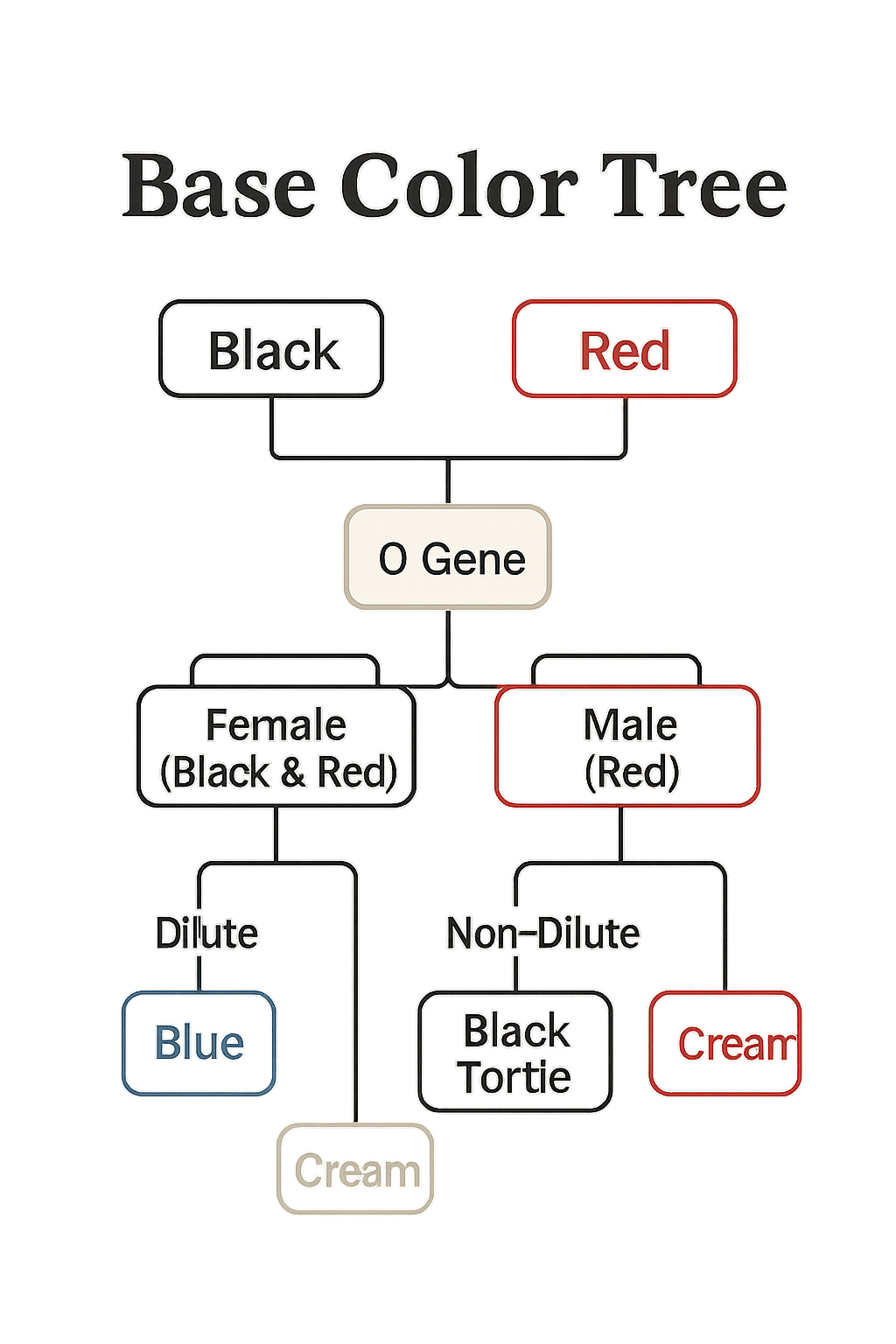
Modifiers & Special Interactions
Some genes act as modifiers — they don’t produce an obvious trait themselves but alter the expression of others. For example, white spotting can mask underlying colors. Epistatic effects can also cause one gene to override or hide another.
Dilution is an example of an interaction: a black (BB or Bb) cat with two “d” alleles may show as blue rather than black.
Agouti Inheritance Illustration
Here’s a visual showing how the agouti pattern trait is inherited when a cat carries both alleles.
FAQ: Common Questions About Coat Genetics
Can two patterned cats ever produce a solid kitten?
Yes. If both are heterozygous at the Agouti locus (Aa × Aa), there’s a 1 in 4 chance of aa solid offspring.
How does dilution (d) affect color?
Dilution causes certain base colors to lighten. For example, black becomes blue and red becomes cream if a cat carries two copies of the recessive dilution allele (dd).
Are modifiers dangerous?
Not inherently, but stacking multiple untested modifiers in one pairing can lead to unexpected results or masking of key traits. That’s why testing and cautious pairing matter.
What if a cat’s color formula is incomplete?
Use underscores (“_”) in place of unknown alleles in a formula. For example: A_ BB CC D_ ii tᵇtᵇ S_ XBY ww. As more breeding or genetic tests are done, you may fill in missing alleles.
How do white spotting and modifiers interact?
White spotting (S) may mask or dilute the visible expression of other coat traits. Strong spotting can hide parts of a pattern, making it harder to visually deduce underlying genotype.
Glossary of Terms
Dilution (d)
A recessive gene that lightens pigment when homozygous: black → blue, red → cream.
Dominant & Recessive
Dominant alleles mask recessive ones when both are present. Recessive alleles show only when both copies are recessive.
Genotype
The genetic makeup of a cat — the alleles it carries, expressed or not.
Loci
Singular: locus. Positions on chromosomes where specific genes are located. Each locus can have different alleles.
Modifier
A gene that changes how another gene is expressed, often influencing intensity or visibility of a trait.
Phenotype
The visible expression of traits — coat color, pattern, markings, etc.
White Spotting (S)
A gene that causes patches of white fur, varying in extent from small mittens to nearly full white coats.