Ethereal Eyes: Facts, Risks, and Our Approach
This page offers a deeper look into the allure and complexity of blue and odd-eyed Maine Coons. At Blóthmáni, we honor both the beauty and responsibility that comes with breeding rare traits. Here we share the facts behind ethereal eyes, the risks involved, and the thoughtful choices we make to protect both vision and lineage.
The Science of Sight: How Eye Color Forms
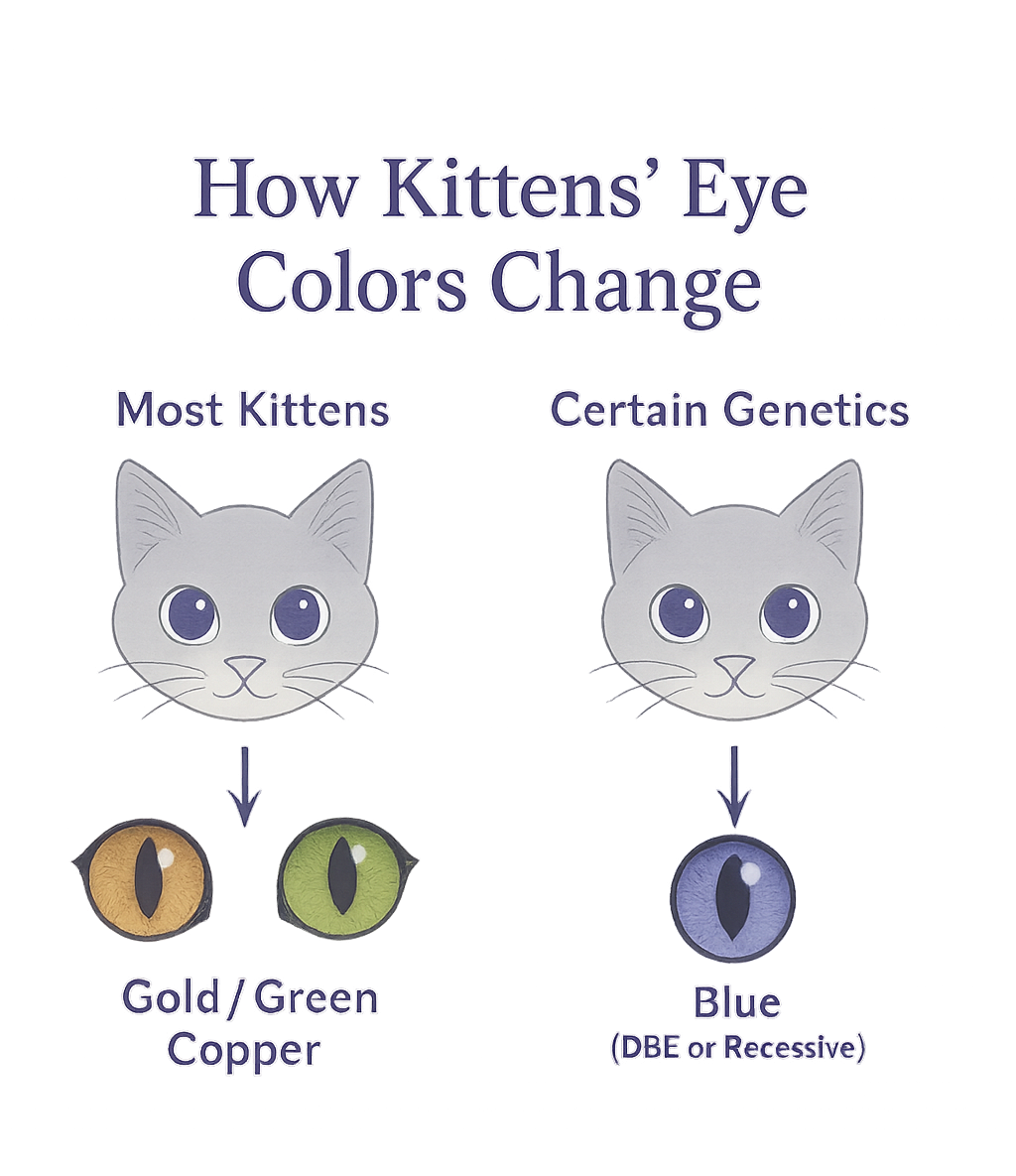
A cat’s eye color is determined by the amount and type of pigment, called melanin, present in the iris. All kittens are born with blue eyes, but over time, most develop green, gold, copper, or hazel hues as melanin production increases with age.
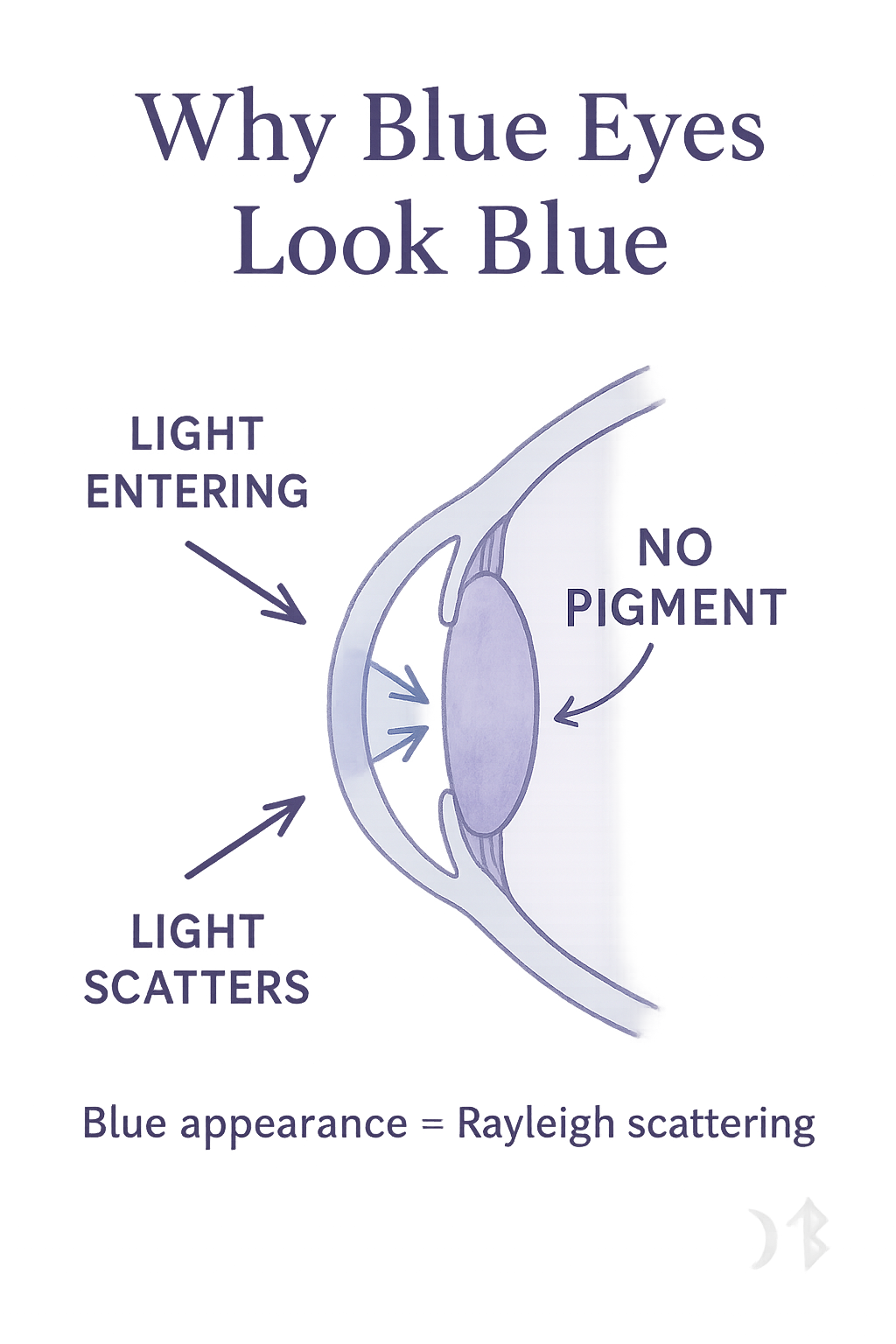
Blue eyes result from lack of pigment, not the presence of blue pigment. Scientifically, the blue appearance is caused by light scattering in the front layer of the iris, similar to why the sky looks blue. This means the iris has little to no melanin. In Maine Coons, blue eyes can occur for different reasons. Understanding the genetic cause behind them is important, especially when it comes to breeding responsibly.
Odd Eyes and White Spotting: What to Know
Odd-eyed cats, those with one blue eye and one eye of another color, are striking, but the cause behind this trait is not always the same. In Maine Coons, odd eyes can occur due to genetic factors like white spotting, dominant blue eye mutations, or even partial pigment loss in just one eye. Understanding why a cat has odd eyes is essential to assessing potential health risks.
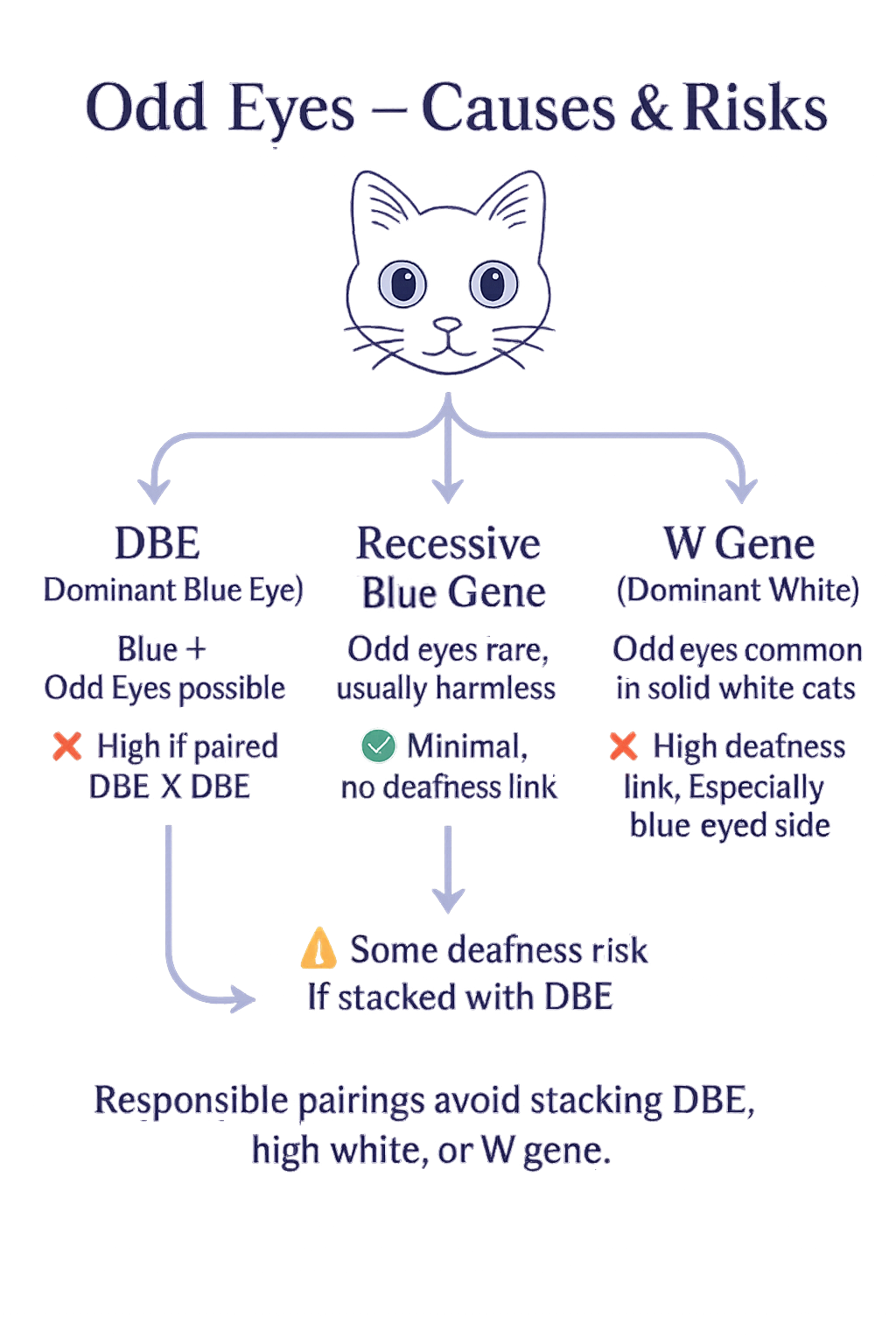
While many odd-eyed cats are perfectly healthy, some combinations of genes, particularly those involving white spotting or dominant white, have been associated with a higher risk of congenital deafness. This is especially true when both parents contribute genes that reduce pigment or increase white expression.
At Blóthmáni, we take this seriously. Our cats with DBE or high white expression are carefully paired to avoid double doses of risk-bearing traits. We do not breed DBE × DBE pairings, and we avoid stacking white spotting lines when possible. When appropriate, we use BAER testing, Brainstem Auditory Evoked Response, to check for early signs of hearing loss.
Our goal is not just to create beautiful cats but healthy ones with sound structure, hearing, and vision. Eye color may be enchanting, but we believe knowledge is what makes it truly shine. Each pairing we make reflects our commitment to ethics, genetics, and legacy.
Safe vs Unsafe Pairings: Genetic Compatibility at a Glance
Based on what we now understand about blue eyes, odd eyes, and the role of pigment-related genes like DBE, W, and white spotting, here is a simplified guide to safe and unsafe trait combinations in Maine Coon pairings.
Safer Combinations
- DBE × Non-DBE, single gene expression
- Odd-eye × Standard eye, low white expression
- Poly × Carrier, one copy only
- Recessive blue × Non-white coat
Higher-Risk Combinations
- DBE × DBE, doubled risk for deafness
- W gene × W gene, avoid full white-to-white pairings
- Poly × Poly, structural defect risk
- High white spotting × high white, pigment and hearing risk
When in doubt, test. BAER screening is recommended for all kittens produced from DBE, W, or high-white lines.
Our Breeding Philosophy and Eye Trait Management
At Blóthmáni, we are drawn to the rare and the radiant, but never at the cost of a cat’s well-being. When it comes to eye traits like DBE or odd eyes, we balance beauty with responsibility. Not all eye mutations are the same, and not all are safe to combine.
We use genetic testing, visual trait tracking, and pairing strategies to ensure no cat inherits multiple risky or poorly understood traits. This means no DBE-to-DBE breedings, no white-to-white pairings, and no guesswork. We treat eye traits like any other gene: worthy of respect, study, and careful planning.
Every cat in our Moonhall program is chosen not just for their beauty, but for how well their genetics complement our long-term vision. Blue eyes, odd eyes, or standard shades each tell a story. Ours is a story of intention, health, and heritage.
FAQ: Common Questions About Eye Colors
Are all blue eyes in Maine Coons caused by DBE?
No. While DBE is one cause of blue eyes, Maine Coons may also have blue eyes from recessive genes or from white spotting. It’s important to know the genetic source, as some types carry health concerns while others do not.
Can odd eyes lead to deafness?
Odd eyes themselves don’t cause deafness, but when linked to white spotting or the W gene, there can be an increased risk. That’s why careful pairing and BAER testing are essential.
What is the W gene?
The W gene is a dominant gene responsible for solid white coat color in cats. It can also influence eye color and is strongly associated with congenital deafness, particularly in blue-eyed or odd-eyed white cats.
What is a BAER test?
BAER stands for Brainstem Auditory Evoked Response. It’s a non-invasive hearing test used to detect deafness or partial hearing loss in cats and other animals. It’s especially recommended for cats with blue eyes, odd eyes, or high levels of white spotting or the W gene.
Can I request a kitten with blue or odd eyes?
We welcome inquiries, but our priority is pairing for health first, then aesthetics. Eye color requests are considered only if they align with responsible genetics.
Glossary of Terms
BAER Test
Short for Brainstem Auditory Evoked Response. This is a non-invasive hearing test used to detect deafness or partial hearing loss in cats and other animals. It’s especially recommended for cats with blue eyes, odd eyes, or high levels of white spotting or the W gene.
Dominant Blue Eyes, DBE
A rare genetic trait that causes blue eyes in cats, even those without white fur. Unlike recessive blue eyes, DBE only requires one copy of the gene to express. It is considered a relatively new mutation and is still being studied. Some forms of DBE may be linked to hearing or developmental risks if paired incorrectly.
Rayleigh Scattering
A physical light-scattering phenomenon that causes unpigmented eyes to appear blue. It is not genetic, but optical. Blue light scatters more than other wavelengths, making clear or lightly pigmented eyes look blue. This explains why many kittens appear blue-eyed early on. These eyes may later darken as pigment develops. Rayleigh scattering is not related to DBE or the W gene.
Recessive Blue Eyes
A type of blue eye color that only appears when a kitten inherits the same recessive gene from both parents. Unlike DBE, it’s not dominant and usually occurs without white spotting. It’s less common in Maine Coons and is typically considered harmless.
W Gene
A dominant gene responsible for solid white coat color in cats. It can also influence eye color and is strongly associated with congenital deafness, particularly in blue-eyed or odd-eyed white cats. The W gene is different from the DBE gene and behaves differently in inheritance.
White Spotting
A gene that causes patches of white fur on a cat’s coat, ranging from small mittens to nearly full white coverage. It can also influence eye color by reducing pigment in the iris. In some cases, high levels of white spotting may be associated with hearing risks, especially when paired with DBE or the W gene.